
overview
Turning physical spaces into clear packing plans for DIY movers
Milo is a mobile-first AI product designed to help DIY movers plan their packing and shipping with confidence. Using spatial scanning, Milo translates physical spaces into personalized packing plans.
Milo explores how product design can reduce cognitive overload in DIY moving by translating physical space into structured, actionable guidance.
Role
Product Designer
Timeline
5 Months
Scoupe
Research
UX strategy
Wireframe
UI Design
Usability Testing
Deliverables
Interactive Prototype
Design System
the problem
DIY Movers Lack Decision Clarity
While logistics services are easy to access, few platforms help users understand what is right for their situation. Without personalized guidance, decisions about materials, cost, and shipping create unnecessary anxiety during the moving process.

Solution
Milo: Personalized packing plans connected directly to services
While logistics services are widely available, few platforms help users determine what they actually need for their move. Without personalized guidance, decisions about materials, costs, and shipping often create unnecessary stress. Milo addresses this gap by generating tailored packing plans and linking users directly to the services and supplies required to execute them.
Key decisions
01 Gather move information
Establishing the context for accurate planning
Users begin by entering key move details such as origin, destination, and move date. This information anchors Milo’s recommendations, ensuring packing estimates and shipping options reflect the user’s specific situation.


02 Scanning the items for packing
Turning physical spaces into structured data through AR and Vision System
Using AR scanning, Milo helps users capture their belongings room by room. This removes the need for manual inventory estimation and allows the system to generate more accurate packing recommendations.
The system relies on existing object-recognition models (such as Google Vision APIs) to identify item categories like clothing, furniture, and electronics, which are then mapped to packing material estimates.

03 Translating Data into Action
From insight to execution
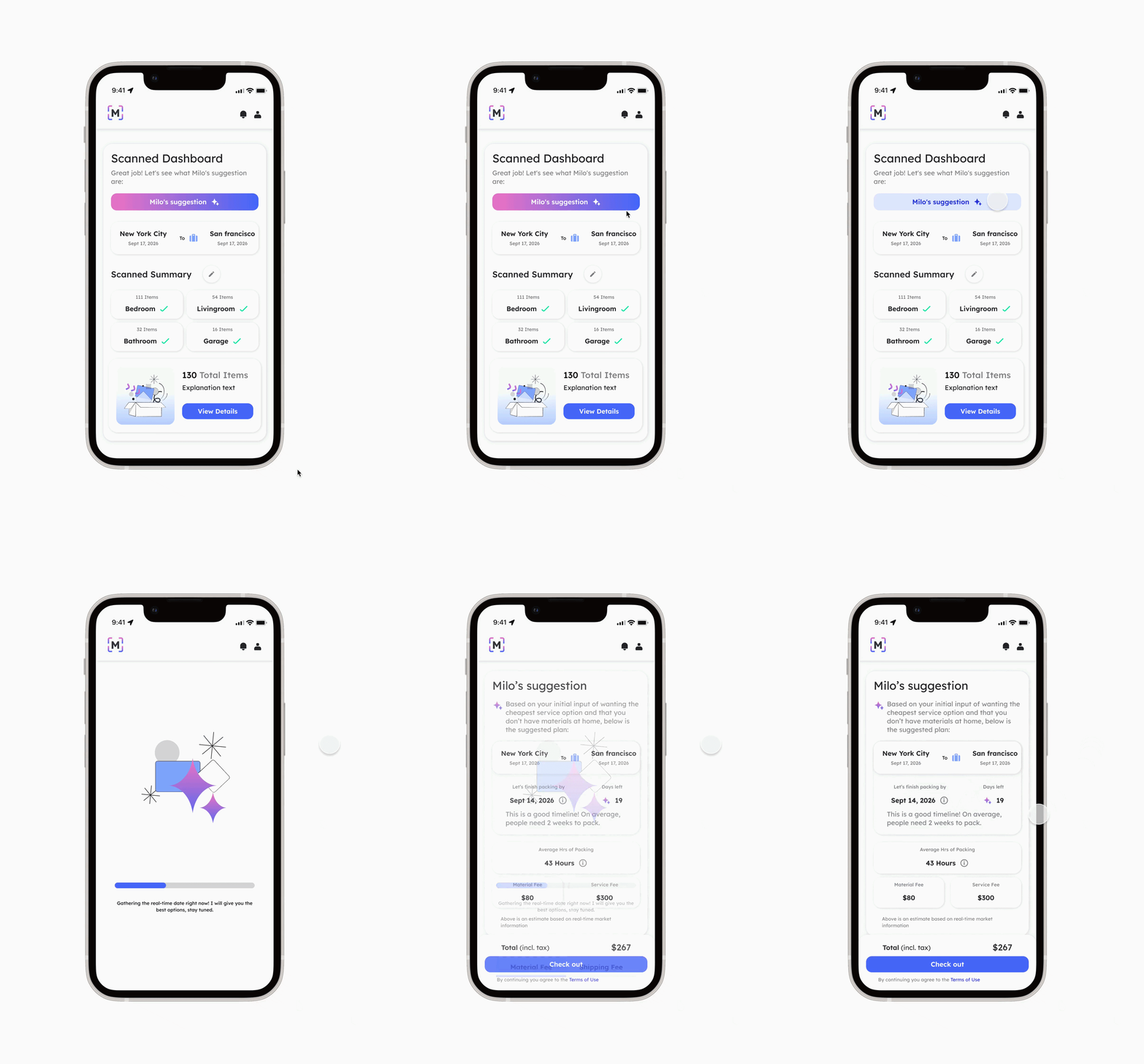
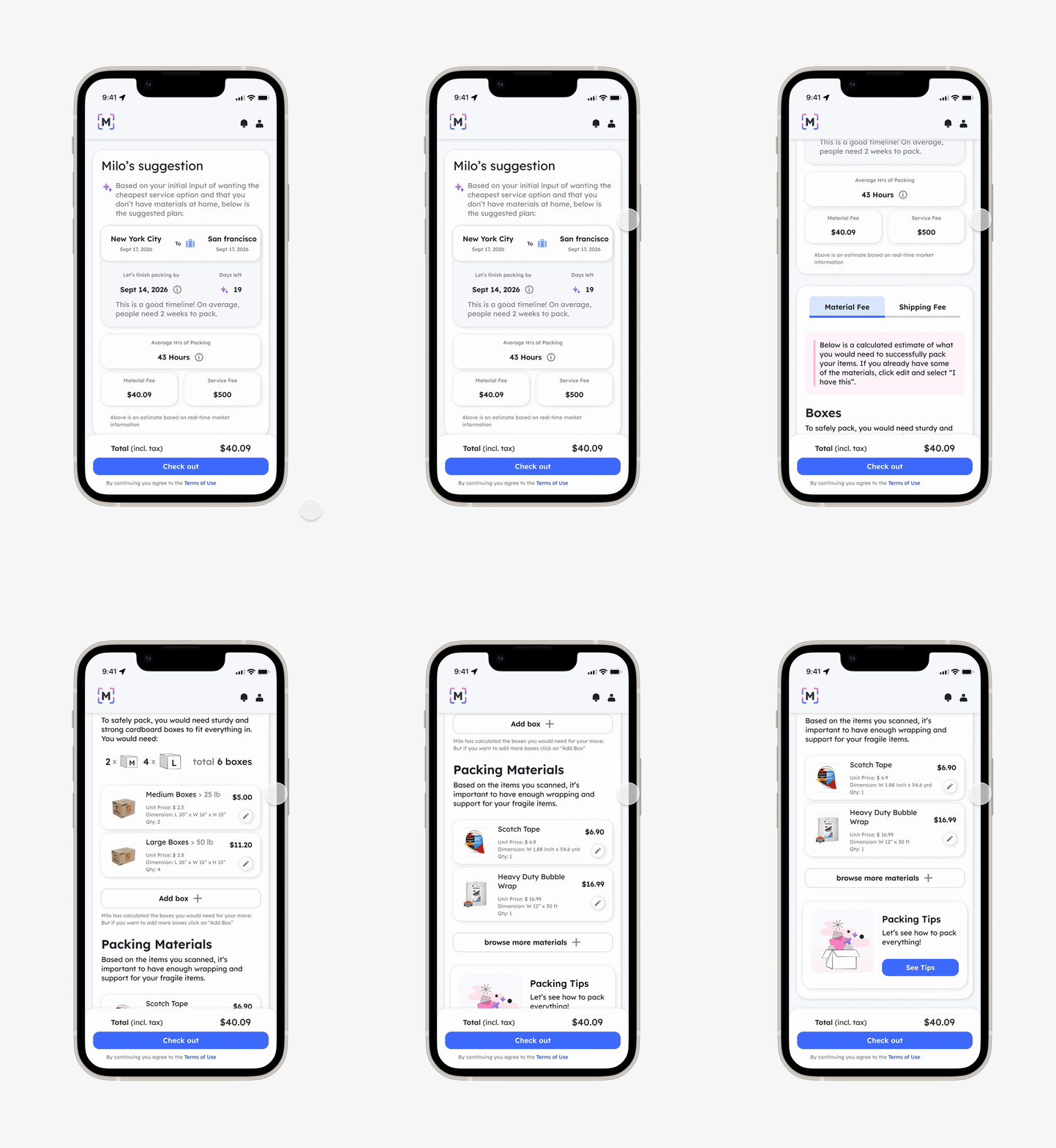
After scanning, Milo generates a structured packing plan including box counts, materials, cost estimates, and shipping options. Users can adjust recommendations and purchase materials or services directly within the platform.
Impact
Usability validation
5 / 5 participants
reported Milo helped them estimate packing needs more confidently
Planning clarity
Consolidates 3 major planning unknowns into a guided workflow:
time | materials | cost
Business Opportunity
By reducing early planning friction, Milo increases engagement with downstream services like:
packing materials | shipping options | moving services
Research & Analysis
Moving stress comes from uncertainty, not logistics
I conducted five remote interviews with DIY movers ages 20 to 30 who had relocated within the past 1.5 years. Participants managed their moves independently and were cost- and time-conscious.
The conversations focused on how they planned, estimated costs and materials, and where uncertainty created stress.


Competitive Analysis
Existing moving platforms help execute moves, but not plan them
I analyzed major moving and logistics platforms. While companies like truck rental services, container providers, and gig labor platforms provide infrastructure, their interfaces often:

Summary of Insights
User research
Lack of control drives most of the stress during moving.
Movers often feel anxious when they can’t predict or manage key parts of the process — such as costs, timelines, or the reliability of service providers. Much of their frustration stems from uncertainty and limited transparency.
Market Research
Lack of customization for users.
Market leaders' services often lack customization that is tailored for the mover’s experience. Many feel like an online catalogue, causing cognitive overload for users.
Design Question
How might we help DIY movers feel more in control while keeping costs predictable and transparent?
Ideation
Defining the key task flow

I created mid fidelity wireframes to visualize the flow.

Branding
The visual style emphasizes clarity and calmness during a stressful moving process.
Branding was intentionally personalized, a butler named "Milo". LIke Ironman's Jarvis, Milo is here to help. Rather than a neutral utility, Milo behaves as a guide. The tone is reassuring, structured, and supportive. This design choice addresses the emotional layer uncovered in research:


Design System
Atomic Design enabled reusable components across Milo’s interface
I structured Milo’s interface using Atomic Design, organizing the UI into reusable components from atoms like buttons and icons to full pages. Since Milo generates dynamic outputs such as packing recommendations, materials lists, and cost comparisons, a modular system helped maintain consistency while allowing faster iteration.


Usability Testing
Evaluating how users interpret and trust AI-generated packing recommendations
I conducted moderated usability tests with five DIY movers aged 20–30. Each 15–30 minute session evaluated how easily users could understand Milo’s recommendations and adjust their packing plan.
Key Insights
AI Trust Consideration
Most users have questions about AI accuracy, and they want to have manual access for mitigating errors. Overall, users want more control in the process, allowing customization.
UI Info Clarify
Several users struggled to locate and understand key interactive features, indicating that some controls in the suggestions interface lack sufficient visual clarity and affordance.
Design with AI
This surfaced a key design challenge: Milo would operate on probabilistic AI systems (vision detection and estimation logic). Unlike deterministic calculators, its outputs require transparency and reassurance.
Design iterations
Primary Iteration Focus
AI Hallucination Mitigation
I will focus more on how to present the AI information to users that will minimize confusion and distrust.
UI Info Clarify
Add paragraph text. Click “Edit Text” to update the font, size and more. To change and reuse text themes, go to Site Styles.
Scanning flow Iteration


Suggestions Flow iteration


What I learned
Milo shifted from being an AI-powered concept to a clarity-focused product. Research reframed the problem from “how do we automate packing?” to “how do we reduce decision anxiety?” That shift fundamentally shaped the product direction.
Throughout the process, I deepened my ability to design systems that communicate complexity without overwhelming users. I focused on building modular information structures, aligning visual language with emotional intent, and ensuring that every interaction reinforced confidence rather than adding novelty. The work reinforced that effective product design is less about adding features and more about removing uncertainty.
Milo is intentionally iterative. The next phase will test whether the current structure truly reduces anxiety and where additional scaffolding is needed.


Poster Design
3D Animation of Contest Logo
